
I hold a freshly washed egg in my right hand. With my left index finger bracing the eggs ahead so they don’t roll away yet, I add it to the line on the narrow metal chute. Below, a beam of amber light shines upward, waiting.
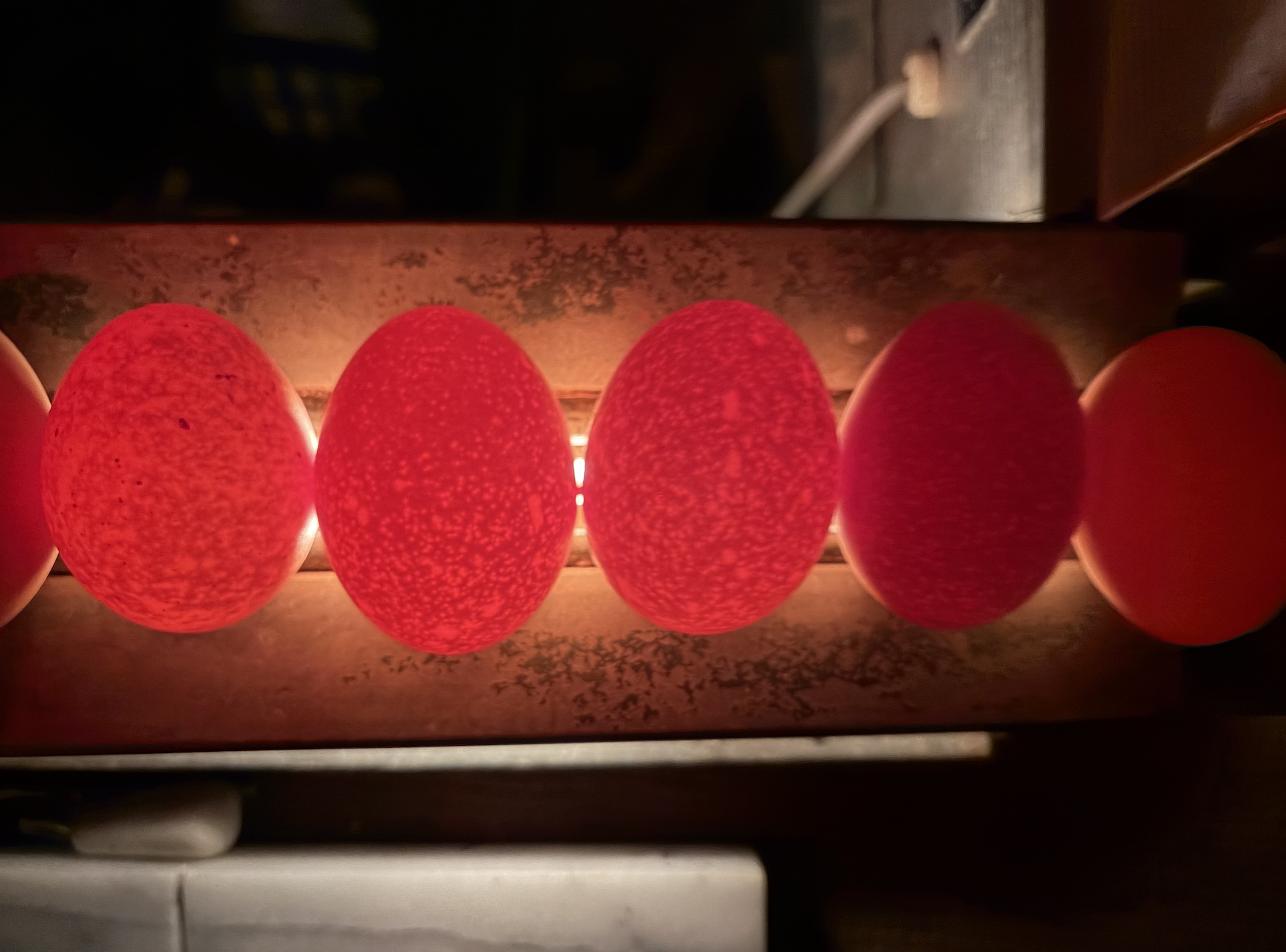
Eggs passing over the candling light.
When I lift my finger, the eggs begin to move. Slowly, one by one, they roll over the light and onto a series of scales: Jumbo. Extra-large. Large. Medium. Small. Each egg is measured, then gently released, wobbling into place, cushioned by Styrofoam and the soft bumper of eggs already sorted.
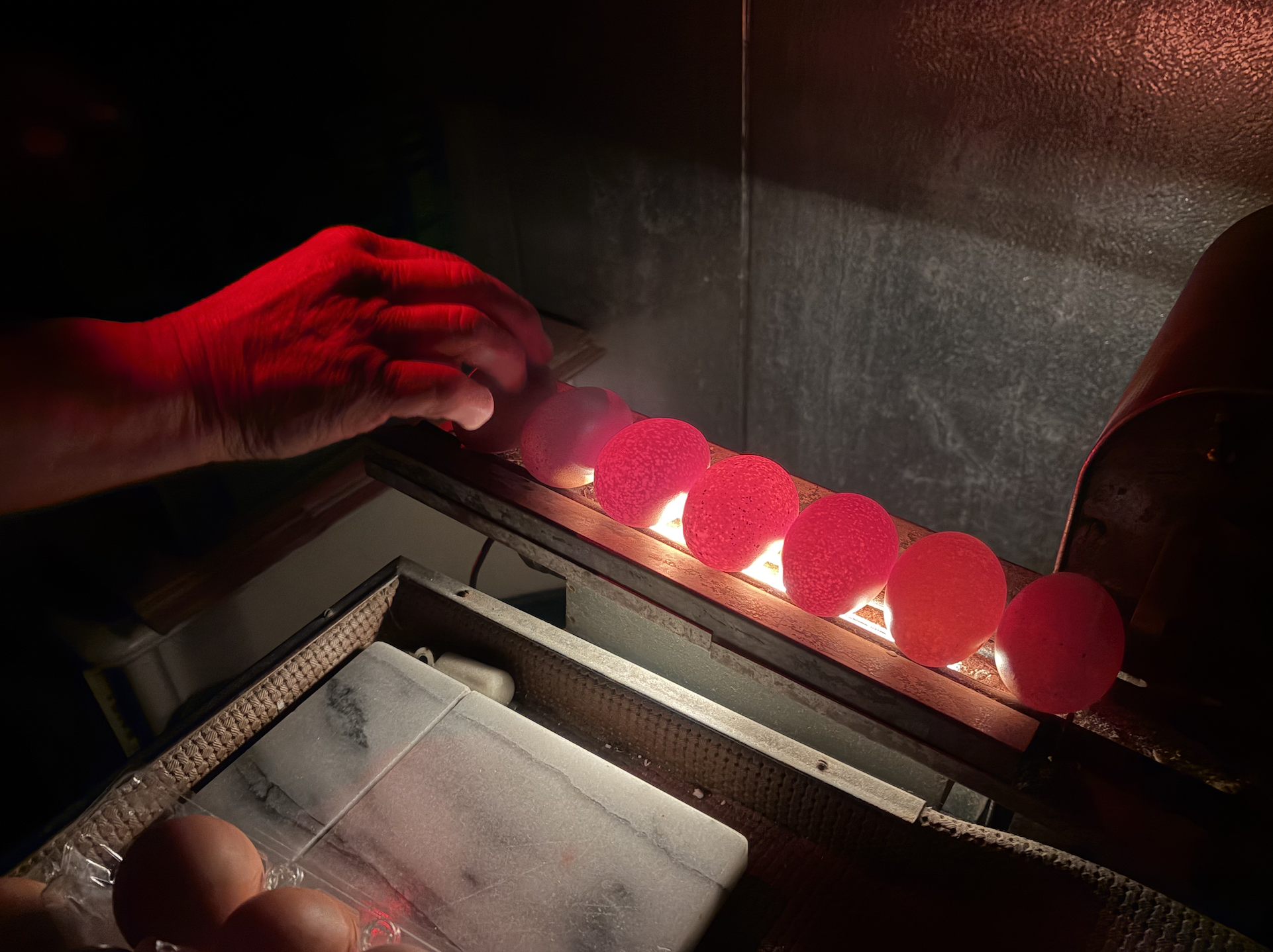
Farmer Dave (Dad to me) keeps the eggs coming!
A steady rhythm is best, and I try to keep the flow of new eggs consistent. When the light catches a flaw, the process pauses. A crack, suddenly obvious when illuminated from below. Jagged fractures in the shell. These get set aside. Still fine to eat, but not to sell. The rest are boxed, labeled, stacked for market.
Candling and grading eggs is a deeply familiar process for me. As a child, I sorted eggs on this same ancient machine—one from another century, built to last. The dark room, the glow of the light, the steady mechanical turning of a faithful machine. The eggs—opaque, dense, nutritious little orbs—suddenly rendered translucent. It is at once mystical and methodical.
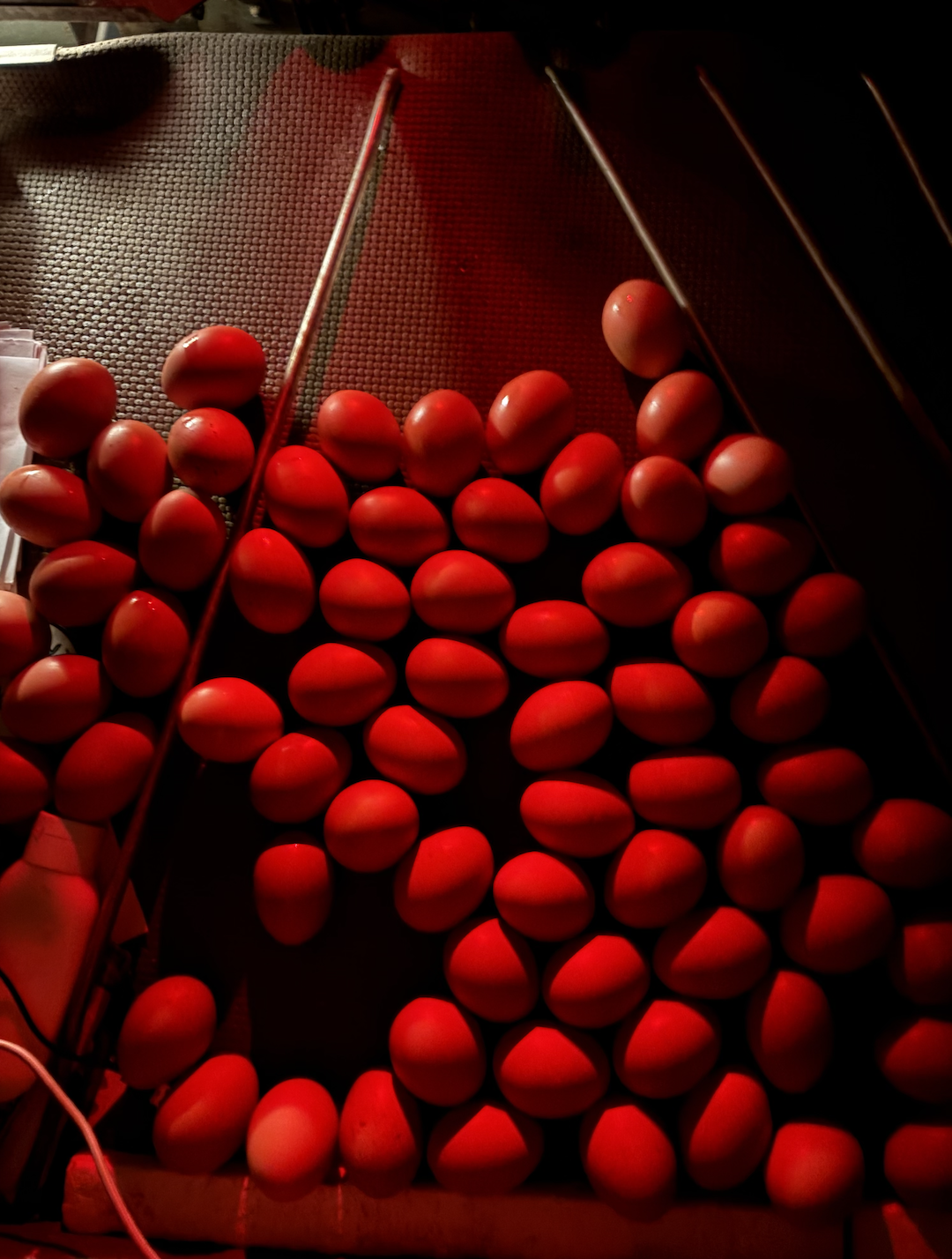
Measured eggs ready to be boxed.
Returning to the farm for a few months this year, I’ve been learning new things. For example: the light enters the egg production system long before the grading table. Somehow, I had forgotten that we have eggs in winter in the first place because of light-based intervention.
Winter means shorter days, but hens need roughly fourteen hours of light to keep laying. The hens’ sense of time is extended with electric light—it’s solar-powered, so truly embalmed sunlight. Farmer Dave (Dad to me) gives them artificial evenings through the fall, then stops around Christmas, letting them pull back and rest until production picks up naturally in spring. Light becomes a way of intervening in the seasons to extend productivity.
Returning to the farm has hardly demystified the childhood magic; if anything it has expanded it. Understanding the nuances and precision of our food production systems makes them stranger and more beautiful.